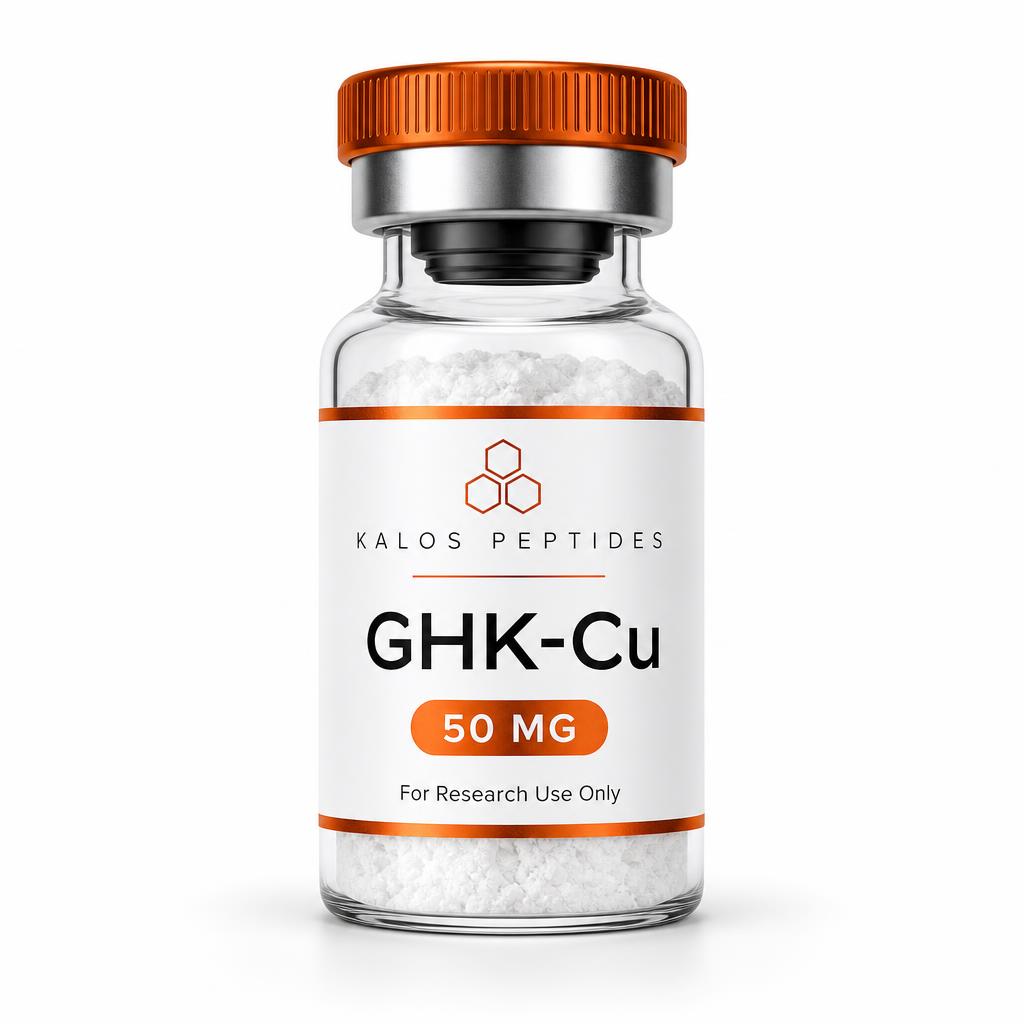
Skin Research
GHK-Cu
$50.00 CAD
All prices shown in Canadian Dollars (CAD) · 🍁 Ships Canada-wide
A copper peptide complex renowned for its skin-rejuvenating and regenerative properties. Research highlights benefits for collagen production, wound healing, hair growth, anti-aging, and reduced inflammation.
Select size
Specifications
- Purity
- ≥99%
- Quantity
- 50mg
- Storage
- Lyophilized: -20°C. Reconstituted: 2-8°C
- Research Use
- Laboratory research only. Not for human use.
1. Overview
Full name
Glycyl-L-Histidyl-L-Lysine Copper Complex
Category
Skin / Regenerative Copper Peptide
Abbreviations
Summary
A naturally occurring tripeptide bound to copper, renowned for skin rejuvenation, wound healing, hair growth, and anti-aging effects.
2. What It Does
Primary functions
- Stimulates collagen and elastin synthesis
- Accelerates wound healing
- Promotes hair growth
Secondary effects
- Reduces inflammation
- Improves skin elasticity and firmness
- Antioxidant activity
Biological pathways
- Copper-dependent enzyme activation
- TGF-β signaling for collagen
- Antioxidant enzyme upregulation
Mechanisms of action
- Delivers bioavailable copper for collagen cross-linking enzymes
- Stimulates fibroblast proliferation and ECM remodeling
- Upregulates antioxidant defense
3. How It Works
GHK-Cu delivers copper to enzymes critical for collagen and elastin cross-linking, dramatically improving skin structural integrity.
It stimulates fibroblasts and keratinocytes, drives ECM remodeling, and upregulates antioxidant defenses. In follicles it extends the anagen phase, supporting hair regrowth.
4. Benefits
Skin rejuvenation
Increased collagen and elastin.
Wound healing
Faster closure and reduced scarring.
Hair growth
Extended anagen phase, thicker hair.
Anti-aging
Reduced wrinkles and improved firmness.
Anti-inflammatory
Reduced skin inflammation.
Antioxidant
Protection against oxidative damage.
5. Why People Use It
Common goals
- Skin rejuvenation
- Hair restoration
- Wound healing
Typical use cases
- Dermatology research
- Wound healing studies
- Hair growth research
Popular applications
- Skin research protocols
- Cosmetic peptide studies
Who uses it
- Dermatology researchers
- Cosmetic science labs