Metabolic
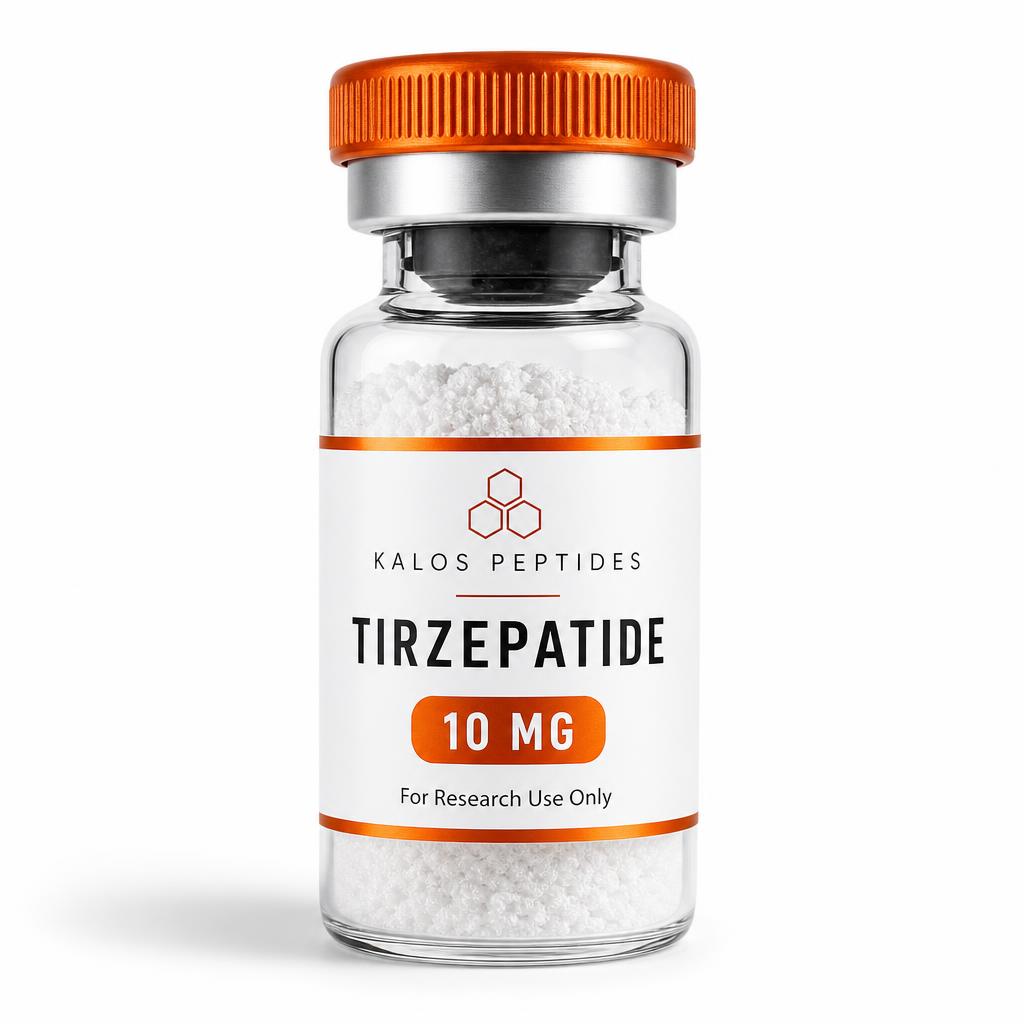
Tirzepatide
$55.00 CAD
All prices shown in Canadian Dollars (CAD) · 🍁 Ships Canada-wide
A dual GIP and GLP-1 receptor agonist researched for its powerful effects on appetite regulation, glucose control, and significant fat loss. Studies highlight improvements in insulin sensitivity, cardiovascular markers, and overall metabolic health.
Select size
Specifications
- Purity
- ≥99%
- Quantity
- 10mg
- Storage
- Lyophilized: -20°C. Reconstituted: 2-8°C
- Research Use
- Laboratory research only. Not for human use.
1. Overview
Full name
Tirzepatide
Category
Metabolic / Incretin Mimetic
Abbreviations
Summary
A synthetic dual agonist of the GIP and GLP-1 receptors studied for powerful effects on glycemic control, appetite regulation, and clinically significant fat loss.
2. What It Does
Primary functions
- Enhances glucose-dependent insulin secretion
- Suppresses appetite and slows gastric emptying
- Drives substantial body fat reduction
- Improves systemic insulin sensitivity
Secondary effects
- Lowers triglycerides and LDL
- Improves blood pressure and cardiovascular markers
- Reduces hepatic fat content
Biological pathways
- GIP receptor (Gs/Gq cAMP)
- GLP-1 receptor (Gs/cAMP/PKA)
- Hypothalamic POMC/AgRP appetite circuits
- Pancreatic β-cell insulin secretion
Mechanisms of action
- Dual incretin activation amplifies postprandial insulin release
- CNS modulation of satiety signaling
- Delayed gastric emptying prolongs satiety
- Improved β-cell function and glucose disposal
3. How It Works
Tirzepatide binds simultaneously to GIP and GLP-1 receptors on pancreatic β-cells, triggering glucose-dependent insulin release while suppressing glucagon. This dual agonism produces a stronger insulinotropic effect than GLP-1 alone.
In the hypothalamus it acts on arcuate POMC/CART neurons to amplify satiety and inhibit orexigenic AgRP/NPY neurons, sharply reducing caloric intake.
Slowed gastric emptying extends postprandial fullness and blunts glucose spikes. Improved insulin sensitivity shifts substrate use toward lipid oxidation, accelerating fat loss.
4. Benefits
Fat loss
Large reductions in total body weight and visceral adiposity.
Glycemic control
Substantial reductions in HbA1c and fasting glucose.
Cardiometabolic health
Improvements in lipids, blood pressure, and inflammation.
Appetite regulation
Marked reduction in hunger, cravings, and food noise.
Liver health
Lowered hepatic steatosis and improved liver enzymes.
Insulin sensitivity
Enhanced glucose disposal and β-cell function.
5. Why People Use It
Common goals
- Significant fat loss
- Metabolic recomposition
- Appetite control
- Glycemic optimization
Typical use cases
- Obesity research
- Type 2 diabetes models
- Metabolic syndrome studies
Popular applications
- Weight management protocols
- Cardiometabolic research
- Body composition studies
Who uses it
- Metabolic disease researchers
- Body recomposition investigators
- Endocrinology labs